
Author Archives: Fignatius

Farewell, Old Friend


The Final Issue

The Final Issue

I am sure it was the case with many people, but I was shocked to hear of Conte Nast’s decision to halt the publication of Gourmet magazine.  Though I’ve only been a subscriber for the past three or four years, I enjoyed the magazine greatly (the only strictly food magazine I get), not only for recipes, but for information about food culture and restaurants (as well as the gorgeous photography).  Something about perusing the pages of the publication gave me a comforting pleasure on many Sunday mornings, when the day was up to me and the recipes would inspire culinary adventures.

IMG_0026

As my friend Rikki mentioned, Gourmet was as much about the connections people have through food as it was about the food itself.  The pages and pages of photos showed happy gatherings of people in a vast array of aesthetics, from sleek and cool to grainy and homespun.  Likewise, as much as the magazine inspired me to cook, it also inspired me to share meals with my friends and loved ones, from fancy plated dishes to family-style Sunday dinners.  Though a great number of my closest friends are far flung and cannot always make it to dinner on Saturday evening, Gourmet inspired me to call people to the table, to share something we all love (good food), and to share an experience together.

Apple Cranberry Pie (w/Pie Bird)

Apple Cranberry Pie (w/Pie Bird)

We are relying more and more on electronic communications, which is brilliant for occasions when money and time get in the way of gathering together, but email, instant messaging, and texting all create a barrier between us.  There is nothing like seeing and hearing your friend throw their head back in laughter, or watching the face they make when they take the first bite of the apple-cranberry pie your husband just made.  You can’t replace those moments with something virtual; they are first-hand, and they are to be cherished.

Dahila

Meggie always says that one of her favorite things to hear is the phrase, “I’ll make you a plate.”  I couldn’t agree more.  It is like hearing, “I know you have to go, but I just want to let this evening linger a little longer for you.”  In some way, having a plate made for you is like being given a tangible memory.  Just as you’ll go home and sit on your couch and enjoy that delicious meal once more, you’ll also savor the memory of the evening thereafter, maybe because of the food, maybe because of something that happened.  Just remember that it was the food that brought you there in the first place.
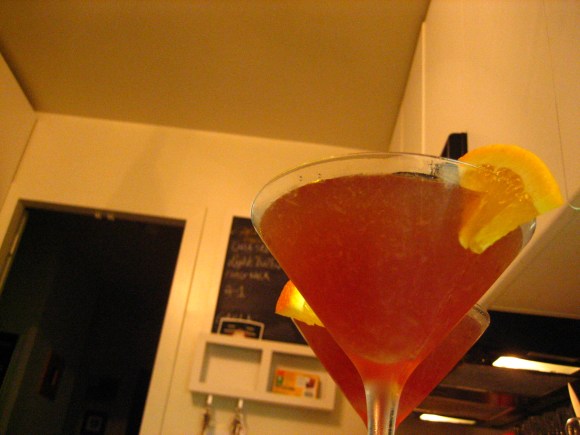
Ward Eight

Thanks, Gourmet (and especially Ruth Reichl) for many good years of bringing people together with the excuse of needing to eat something.  We made the Ward 8 Cocktail from the pages of your October 1962 issue and found it to be perfect for an autumn evening; proof that you may be out of print, but you’ll continue to inspire.

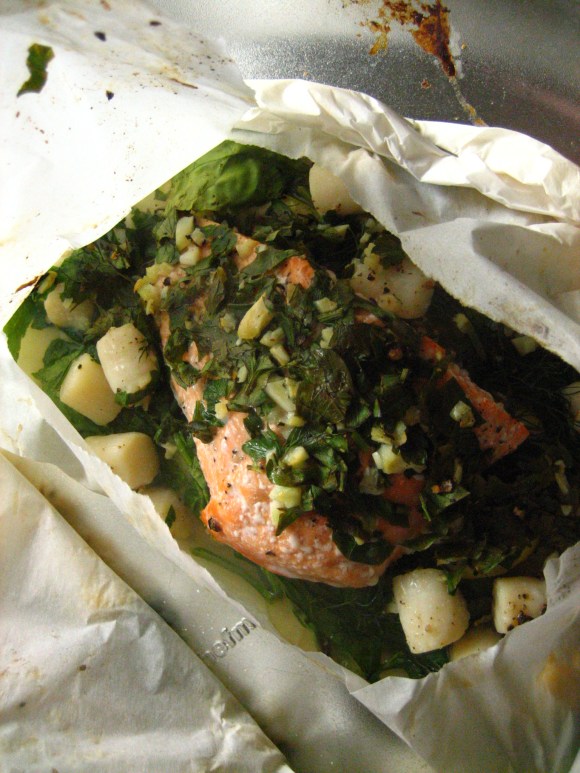
Poachie Paks


Poor Christine, who loves to cook, is currently without an oven as she and Chuck renovate Edgewood Manor.  In the face of this kitchen deficiency, she’s been forced to creatively prepare delicious and healthful meals using her stovetop and a (rather substantial) toaster oven.  Because, like me, she loves to eat almost as much as she loves to cook, she’s come up with some real winning dishes, and some that are extremely appropriate for weeknight (read: easy) preparation.  She asked me to showcase one of her favorite new things, which is more of a method of cooking than anything:  Poachie Paks.

In French cooking, they call this method en papillote, which I think means, “in paper,” or “in envelope.”  Basically, you put all of the food you will eat in a meal onto a piece of parchment paper or aluminium foil, fold it closed, and seal it tightly.  If you are careful to make sure everything is the right size to cook at the same time, this method of cooking will serve you very well.  The prep work is the key; cook time can be very quick, depending on your ingredients.  

You can cook just about anything in a poachie pak, but I think fish, seafood, and vegetables are particularly good choices, because they cook so fast.  Martha Stewart has whole sections of her website devoted to cooking en papillote, so if you want some additional ideas, I would have a look there.  For me, I want everything to come out tasting fresh, but somehow connected as a composed dish; herbs and seasonings lend a strong hand in bringing everything together.  For the version I present here, dill and garlic both play a role in perfuming all of the ingredients.  It is probably just the basic physics of flavor, steam, and aroma, but I think there is a little magic that happens inside these little parcels when you put them in the oven.  Have a look at the before and after:

Poachie Pak Before

Poachie Pak Before

Poachie Pak After

Poachie Pak After

I don’t really know if I can write a full recipe for this, but here is how I put these together (for two poachie paks):  fold two large squares of parchment paper in half diagonally and place 2 to 3 layers of yukon gold potato slices (one medium potato sliced very thinly with a mandoline) on one side of each fold.  Season with salt, pepper and a little olive oil.  Then, layers go down like this, for each pak:  handful of spinach, three slices of lemon, few sprigs of dill, one salmon portion, then a mixture of chopped garlic and parsley, salt, pepper and a squeeze of lemon on top of the fish; scatter bay scallops around.  Seal poachie pak by folding over the free section and crimping the edges together.  Sometimes, this is enough to seal it, but I needed to use a stapler this time – maybe had a few too many ingredients?  Regardless, they were delicious.  If you have ideas of food combinations for future poachie paks, please share!

Roasted Vegetable Stock


Sorry I don’t have a pic of this one for you guys, but I haven’t had to make it in a long time.  I generally figure that, if I am going to go through the effort of making stock, I better make a bunch to freeze so that I’ll always have some around.  Vegetable stock is tricky to me, because it can come out tasting pretty bland and lifeless.  I’ve experimented a lot with it, and I find that garlic and herbs are really the best way to punch up the flavor.  Regarding tomatoes, I leave it up to you.  They can really overpower the flavor, if you are not careful, and if you are the kind of person who likes tomatoes in your soups, anyway, it may be best to leave them out of the stock.  That said, they really add an incredible richness in this roasted vegetable version.  For me, the roasting is really what brings out the great flavor of the vegetables; they brown and caramelize in the oven, and then lend that flavor to the stock when you cook it on top of the stove.  Like chef Anne Burrell says, “brown food tastes good!” 

With October upon us and the weekend coming up, I think it is probably a good time to start stocking up on stock.  This recipe is a good place to start, especially if you can make it to a farmer’s market this weekend for all of the ingredients.  In the end, it may seem like a waste to sap all of the flavor out of the vegetables and then throw them away, but remember that all of the remnants can be composted, so you’ll be contributing to the soil for next year’s crop of vegetables.  Plus, just think of all the amazing things you can make with this stock:  vegetarian minestrone, delicious risotto, and corn and bean chili!  A big batch will go a long way into the cold months, so make some up now and enjoy throughout the season!

Roasted Vegetable Stock