
Collard Greens
I actually get questions from people about vegetables a lot, even at the grocery store. On more than one occasion, the cashier has asked me what a produce item is (just for the purposes of looking up the code for it), but then gone as far as to ask me how I cook it. I always find it a little unnerving to answer the question right on the spot, but I’ve realized that there are just a lot of people who are just curious what to do with certain fruits and vegetables. Now, I’m not claiming to be an expert on anything (persimmons still remain a mystery to me), but my mother was the kind of adventurous eater that made me excited to try new things. The fact that she sometimes made it seem like we were hiding something from my dad (a notoriously picky, boring eater) made it all the more intriguing. Artichokes and pomegranates are fun to eat, but a lot more fun when it seems like you are doing it on the sly.
So, here now is a series dedicated to fruits and vegetables (“How do you…”). Some will be ordinary to you, some might be unfamiliar. It is the great thing about the world wide web – there are a billions of perspectives for each post.
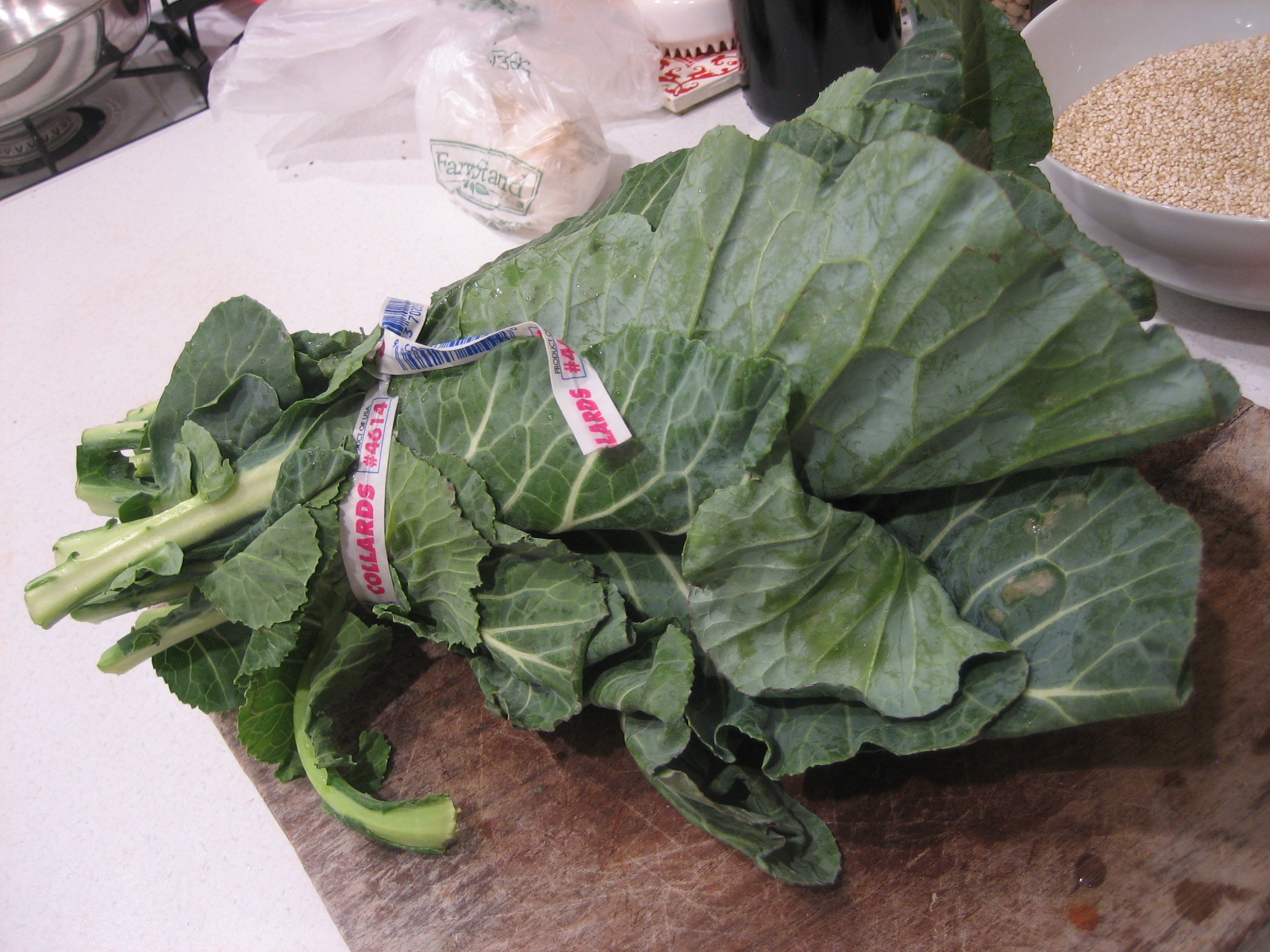
Gonna start with collard greens. Now, I never really ate collard greens as a kid, but when I did, it was in the south and they were simmered for a long time along with some kind of smoked meat, and most often seasoned with hot sauce to taste. They were good. Really good. However, I don’t usually have the foresight to plan a day-long cooking process for dinner, unless it is a weekend or a special event. Through some recipe research (and trial and error), I figured out a way to make quick, tasty collard greens in two versions – one vegetarian and one omnivorous.
The technique is for both is the same. The trickiest part is taking out the tough center rib, which you don’t do when cooking collards in the southern American way, since they cook so long that the ribs become tender. Here’s a little demo on how to do it:
Next, you just roll the leaves into the tightest bundle you can and slice them pretty thinly – like this:

Again, when you make collards in the southern style, you just tear the leaves and don’t need to slice them so thinly, since they cook for so long. You want thin slices for this new version, since the cooking time is so short.
Once you have the leaves all sliced, place them into a colander and rinse thoroughly with cold water – many greens, especially those from farmer’s markets, tend to be rather dirty. Once clean, heat a deep pot large enough to hold all the greens on medium high with a few tablespoons of olive thrown in.
Next, you have the choice of being meaty 0r veggie. For veggie (shown here), throw in a few cloves (five, in this case) of minced garlic until fragrant. For a meaty version, you can add diced ham or Canadian bacon instead of (or in addition to) the garlic. Either way, you will want to add the greens, which will still be somewhat wet from the rinsing process, to the pot before the garlic starts to burn. The water on the greens will create some steam, so capture it by putting a lid on the pot immediately. Stir occasionally until the collards are bright green and glossy, like this:

Glossy Greens
Season with salt and pepper (and red pepper flakes, if you like) to taste. Grab a fork and make sure that they are done to your liking and adjust seasoning, if necessary. Enjoy with or without hot sauce. I had mine with pork chops. =)



 Shallots Web